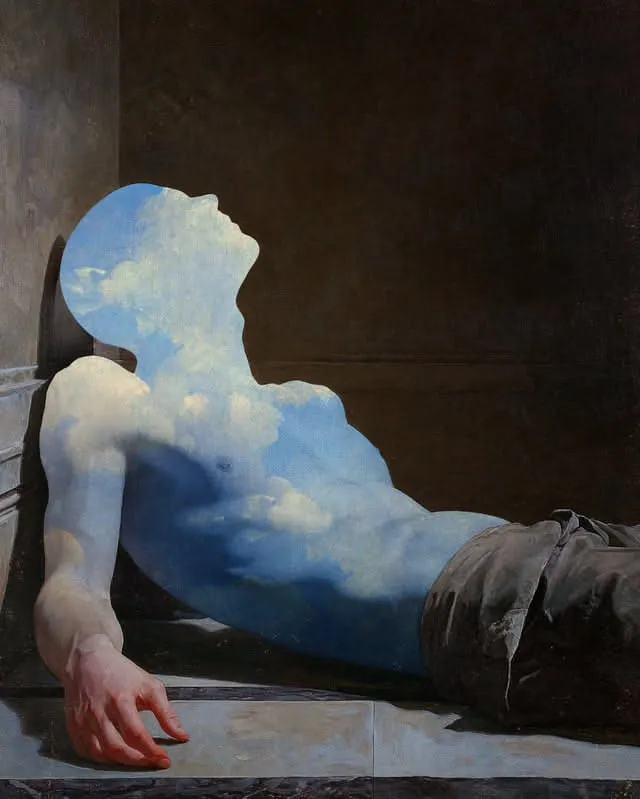
Why Daydreaming Helps Humanity Adapt
Society often pokes fun at those lost in thought, the Walter Mittys of the world, the absent-minded professors- yet these types have an unsuspected advantage. Daydreaming has two core processes that allow it to be scientifically defined, which are: a detachment of attention from one’s surroundings and “the ability to take explicit note of one’s thoughts” (McMillan 3). Research conducted by psychologist Jerome Singer laid the modern foundation for scientific analysis of daydreaming, a universal function experienced by humanity regardless of all other factors. It is so prevalent that up to 50% of our waking hours are spent daydreaming (McMillan 1). The frequency of this experience collides with common societal norms to avoid fantasy and instead focus on reality. Daydreaming may have a negative connotation; however, daydreaming, also known as mind wandering, has many positive benefits. These benefits include increasing creative problem solving and improving social skills. Both of which increase humanity’s ability to adapt to the world. Mind wandering is a key evolutionary trait that aids humans in adapting to challenging environments.
In his book The Inner World of Daydreaming, Singer identified a pattern of daydreaming called positive-vivid daydreaming (now commonly referred to as positive constructive daydreaming).This pattern of daydreaming is represented by “a considerable acceptance of …[daydreaming]…and an ability to use it for planning and a variety of forms of effective functioning” (Singer 69-70). Positive constructive daydreaming is what makes mind wandering an important evolutionary trait. In other words, daydreams allow one to try various options and consider the success or failure of potential choices. Similarly, Ecologist Emilio Moran identifies a type of human adjustment to environmental problems, in his book Human Adaptability, known as regulatory adjustments (Moran 6). Man does not need to physically test each option, when he can daydream them. These adjustments “occur rapidly and reflect the…behavioral flexibility of [humanity]” to adapt to a changing environment (Moran 6). The benefits of mind wandering play an important role in regulatory adjustments and thus are essential for humanity’s unique adaptability to exist.
Positive constructive daydreaming also leads to an increased creative problem solving ability. An experiment conducted by cognitive psychologist Benjamin Baird et al. found evidence that daydreaming can act as a creative incubator. Baird et al. tested participants with a series of creative thinking questions, and then gave them tasks of varying difficulty afterwards. Participants that were given menial tasks reported a significantly higher level of daydreaming than those given focus-intensive tasks. After the participants completed their tasks they redid the earlier creative thinking questions. Baird et al. found a significant improvement in the creative problem solving ability of the daydreaming group when revisiting earlier questions. The researchers found no significant improvement for the groups given no break or an intensive task. The researcher’s findings suggest “the notion that specific types of unrelated thought facilitate creative problem solving” (Baird et al.). Creative problem solving falls under the category of regulatory adjustments. It helps the development of strategies for survival, such as humanity’s ability to harness fire for cooking and warmth. Creative problem solving would have also played an important role in adapting to the “highly flexible and complex” way of life of the hunter-gatherers (Moran 47). Increased creative problem solving would not only have benefitted the earliest humans but continues to benefit humanity in the present.
Actress, athlete, and amputee, Aimee Mullins has harnessed this enhanced creativity in her personal life. She has dealt with the loss of both of her legs as a child, and credits daydreaming with helping her overcome this adversity. When bedridden by her disability, Mullins “used daydreaming as a tool to become an explorer” and traveled in her mind; over the years, she “honed this ability to imagine” and used it to aid her in the creation of her own prosthetic legs (Mullins 3:12). In her early years, daydreaming allowed Mullins to soar in her mind when she could not physically walk. As a child she imagined “flying around on a magic carpet across the Great Pyramids” and “jousting with the knights of the round table” (Mullins 3:31). These wild adventures developed her creativity and fostered her curiosity for the world. In her adult life, mind wandering has served as “the bridge between imagining and creating” (Mullins 6:01). This bridge is evident in her many accomplishments, which she visualized in her mind before “they ever had a chance to become possible in the eyes of anyone else” (Mullins 5:30). Mullin’s daydreams were a tool to help her create her future, and thus, Aimee Mullins’ life showcases creative problem solving enhanced by daydreaming.
In addition to creative problem solving, regulatory adjustments also contingent on daydreaming include social adjustments. Mind wandering can greatly benefit social skills that are important for human cooperation. Daydreams are not limited to individual reviewing of options but are much more advanced. They allow shared visions. Singer proposes that “shared fantasy experiences” allows for the expression of “private daydreams in a public way to find…others” that share similar ideas (Singer 172). Singer uses the example of political party members sharing common ideals and goals. This social expression of daydreaming to form a collective group is evident in tribalism. Forming a group with similar goals would have been essential for survival, and is still highly beneficial in the modern world. Cooperation has led to humanity becoming the dominant species on earth, and tribal cooperation continues to solve many problems. Social adjustments are essential for humanity’s survival and daydreaming helps accomplish this cooperation.
Daydreams are not positive for everyone. A small portion of the population suffers from Maladaptive Daydreaming or MD, “a disorder in which an individual is excessively absorbed in an internal fantasy world in a manner that causes…significant distress or impairment…in other important areas of functioning” (Somer). In the case of those afflicted with MD, mind wandering acts a hindrance to their lives instead of a benefit. Mind wandering is comparative to the common saying that the difference between poison and medicine is dosage. Those with MD lose themselves in daydreams and never come out long enough to apply the benefits of any lessons learned. Mind wandering has many positive benefits if utilized healthily, but obsessively daydreaming can be detrimental. Individuals with MD are also not representative of daydreaming due to their rarity. A research study found strong evidence that those with Maladaptive Daydreaming often have additional mental disorders. Out of 39 participants, 97.4% were diagnosed with 2 or more additional disorders, and 74.4% were diagnosed with more than 3 additional disorders (Somer). Because MD is a rare condition that chiefly affects those with additional serious mental illness, Maladaptive Daydreaming is not representative of mind wandering.
Another more common argument against the adaptive importance of mind wandering is that daydreaming leads to a loss in performance. Research suggests that daydreaming can lead to a decrease in comprehension and sustained attention (McMillan 2). Mind wandering can have these detrimental effects and this lack of focus is likely the cause of a common societal disdain for daydreaming. Timing of the mind wandering is an important factor in regards to this. Experimentation by Singer supports a positive mental benefit of daydreaming while performing under stimulating tasks common in daily life. Participants that daydreamed while completing simple tasks reported feeling “less drowsiness and managed to perform better” compared to those that did not daydream (Singer 82). Singer believes that the “greater arousal and alertness” caused by daydreaming makes up for the “missing of some external cues” (Singer 82). This concept makes sense in an evolutionary context. Early human tasks would commonly be mentally simple, including: gathering, farming, and other physical labor. The exertion of mental activity on these simple tasks could lead to a detrimental fatigue. Alertness to the environment would have been essential to avoid predators, attackers, and other threats.
While daydreaming may be commonly looked down upon, it is a beneficial evolutionary trait that is a key to why humans are the most dominant species on the planet. Mind wandering incubates creative challenges and leads to increased problem solving that aids humanity’s ability to develop strategies for survival. Daydreaming also has positive social benefits that help lead to a shared understanding of goals and ideals. The creation of these social tribes cooperating towards a common goal is essential to human dominance. Although daydreaming can have negative effects, the downsides pale in comparison to the benefits of mind wandering. Daydreaming is a universal experience that helps humanity survive and thrive, regardless of the era.
Works Cited
Baird, Benjamin, et al. “Inspired by Distraction: Mind Wandering Facilitates Creative Incubation.” Psychological Science, vol. 23, no. 10, Oct. 2012, pp. 1117–1122, doi:10.1177/0956797612446024.
McMillan, Rebecca L., et al. “Ode to Positive Constructive Daydreaming.” Frontiers in Psychology, vol. 4, 2013, pp. 626–626, doi:10.3389/fpsyg.2013.00626. Moran, Emilio F. Human Adaptability: an Introduction to Ecological Anthropology. Duxbury Press, 1979.
Mullins, Aimee. “Daydreaming: The bridge between imagining and creating | Aimee Mullins” Youtube, uploaded by TED Archive, 13 Feb. 2017, https://www.youtube.com/watch?v=g_rKE_AWUW0
Singer, Jerome L. The Inner World of Daydreaming. 1st ed., Harper & Row, 1975.
Somer, Eli, , et al. “The Comorbidity of Daydreaming Disorder (Maladaptive Daydreaming)”. The Journal of Nervous and Mental Disease, vol. 205, no. 7, July 2017, pp. 525-530. doi: 10.1097/NMD.0000000000000685.