On the Suffering of Animals
Dr. Bonnie Steinbock writes directly counter to Dr. Peter Singer’s philosophies on speciesism in her writing Speciesism and the Idea of Equality. Singer argues that the capacity of a being to suffer entitles it to moral consideration; meaning that nonhuman animals, such as cows or pigs, deserve to have their interest in avoiding suffering considered at the same level as a human or any other species. Steinbock takes a counter stance to this, arguing that humans deserve an elevated moral standing compared to nonhuman animals. This is due to humans possessing unique capacities due to our intelligence as a species. These morally relevant capacities, such as the ability to take responsibility for one’s actions, take precedence over the capacity of a being to suffer. However, Steinbock claims that this precedence still applies to humans without these capacities, this is based on an argument of ‘that could have been us’, which I will refute in this paper.
Steinbock argues that humans that do not possess relevant moral capacities still deserve to have their interests override those of nonhuman animals because humans can identify with them more than animals and thus have a duty to care for them. Steinbock reasons that because humans can imagine being born as someone with a significant cognitive deficit, we naturally have a preference towards caring for them. She admits that while not grounded in concrete moral reasoning, it is not immoral to ‘care for one’s own’. She insists that this natural preference for taking care of our own species is not immoral as long as we do not cause unjustified suffering for nonhuman animals. Therefore Steinbock declares that the interests of humans override those of nonhuman animals regardless of a human’s possession of morally relevant capabilities.
The central claim that Steinbock argues is that a minimal level of intelligence is what entitles humans to a greater moral standing than nonhuman animals. However, when addressing humans with significant cognitive deficits, this cannot be applied. In order to remedy this, Steinbock caveats her argument by declaring that those humans still deserve more moral consideration than animals due to a human understanding of ‘that could have been us’. But can the same concept not be applied for an animal? Yes we were born humans; however, is it really incomprehensible to think about being born into another species? One may never be able to truly experience the mind of another being, human or not, but we possess the ability to speculate on such qualia. I will refute Steinbock’s claim that ‘that could have been us’ applies to humans with significant cognitive deficits and not nonhuman animals.
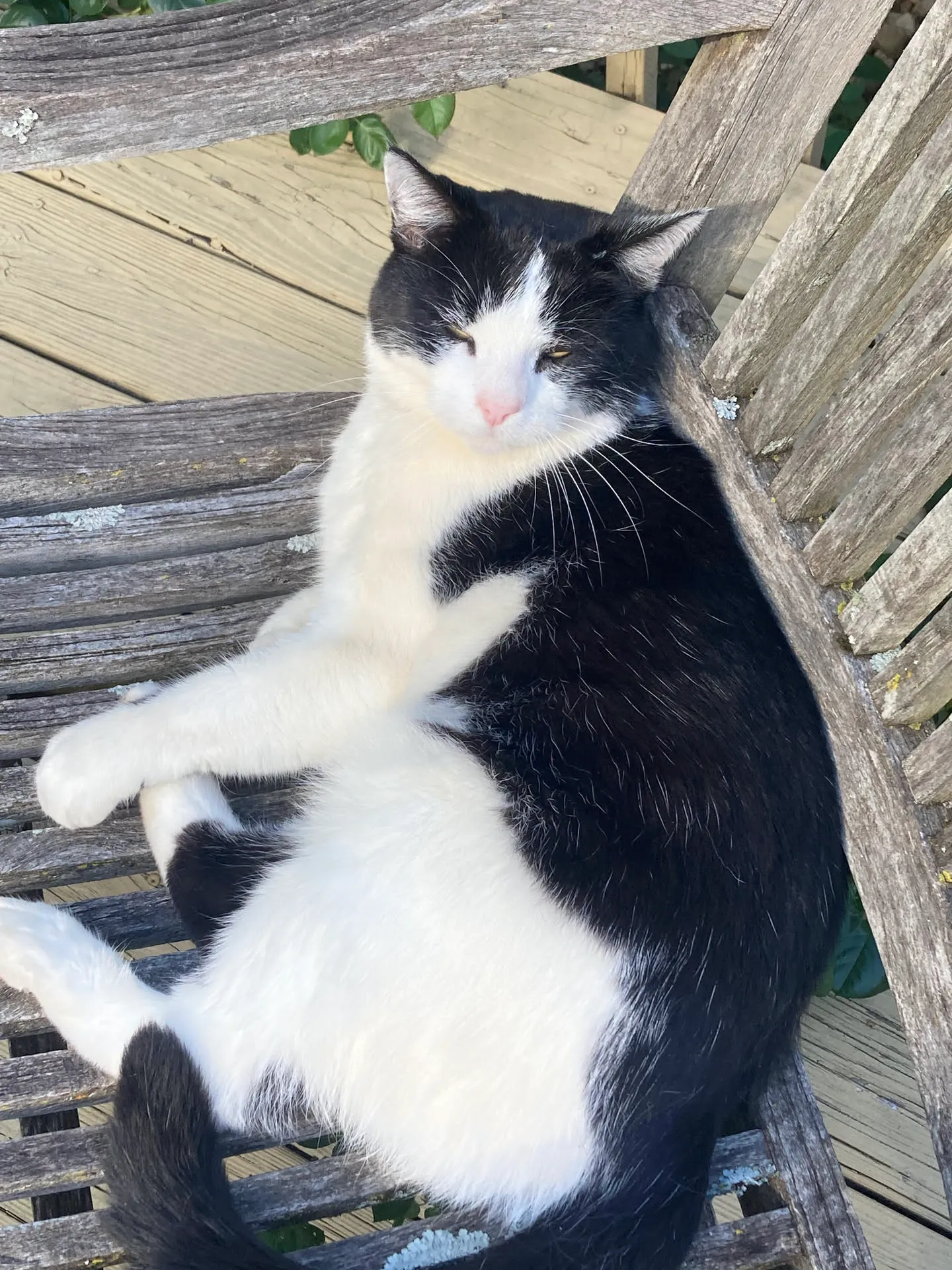
Steinbock claims that it is easier for a person to identify with another human rather than an animal even if said human possesses significant cognitive deficits (SCDs). Steinbock’s claim rests on the idea of “that could be me”. But such a claim is arbitrarily made, because “you” as a being exist due to a combination of your experiences, genetics, and circumstances. If you were born with a SCD then “you” would not exist. Therefore “that could be me” really reflects one’s ability to empathize and understand the experiences of another. This capacity to identify with another does not rely on one’s species but instead on shared understanding of experiences. One might understand the experiences of another human because they can be compared to their own, but the same can be applied to nonhumans as well. One can intuitively understand why a cat basks in the sun. This experience of soaking up warm rays while lounging in relaxation is not uniquely human, and when a human encounters such a cat, are they not often envious, wishing that they could do the same? Or take the playful nature of elephant calves as an example. Does seeing such spirited behavior not invoke deep memories within an onlooker? Does a parent not see such a playful nature reflected within their own children? These are experiences that humans can understand and identify with. These observed behaviors of many animals indicate that intelligence within these species exists in a form that we can recognize and identify with. While we may not be able to experience life through the eyes of a nonhuman animal, these shared experiences allow us to understand them better, and thus identify with them.
Most nonhuman animals and humans with significant cognitive deficits are not capable of reciprocity or Steinbock’s other morally relevant capabilities. However, animals have observable behaviors that can be understood and related to. This often does not apply to those with significant cognitive deficits. If a person with a SCD does not respond to external stimuli and interact with the world in an understood manner then how can other humans attempt to see life through their eyes? Normal adult humans are able to identify with and relate to the experiences of another being by using their own experiences as a reference, but if there is no overlap or understanding of one’s experience then identifying with them becomes difficult even if they are of the same species. Such understood shared characteristics then become purely physical which has no moral bearing given the arbitrary nature of them. For if they did matter, then one could justify caring for one human with a SCD over another with a SCD based on their skin color, which many would find reprehensible. If a human does not possess the capacities that Steinbock argues are morally relevant, and they cannot be empathized or identified with, then it is illogical to declare that such a human’s interests take precedence over a nonhuman animal possessing either or both of such characteristics.
If Steinbock’s preference for caring for those of our species with SCD over nonhuman animals is not rooted in a logical moral reasoning, but instead on “that could be me”, then those with SCDs do not deserve to have overriding interests like the rest of humanity. This would justify experimentation on those with SCDs for the benefit of other humans. Many would find experimentation on those with SCDs, including Steinbock and myself, to be appalling. But if some nonhuman animals such as dolphins or elephants possess more of Steinbock’s morally relevant capabilities than humans with SCDs why should this be the case? If we can identify with these species more so than some humans with SCDs, then surely it would be wrong to experiment on them rather than non-identifiable humans. Yet the idea of experimentation of those with SCDs does not sit well with many. This horror at experimenting on humans with SCDs indicates that a minimum threshold of intelligence should not be used to justify overriding the interests of another being.
Steinbock bases her argument of superiority on morally relevant capacities but when addressing humans with SCDs she tries to handwave her own logic away. When you apply her own reasoning to this topic, the logical conclusion is horrifying. These implications greatly weaken her argument and further credit Singer’s position. Particularly his argument that the status of nonhuman animals should be elevated rather than the status of any humans be lowered, which Steinbock’s reasoning would certainly lead to.